
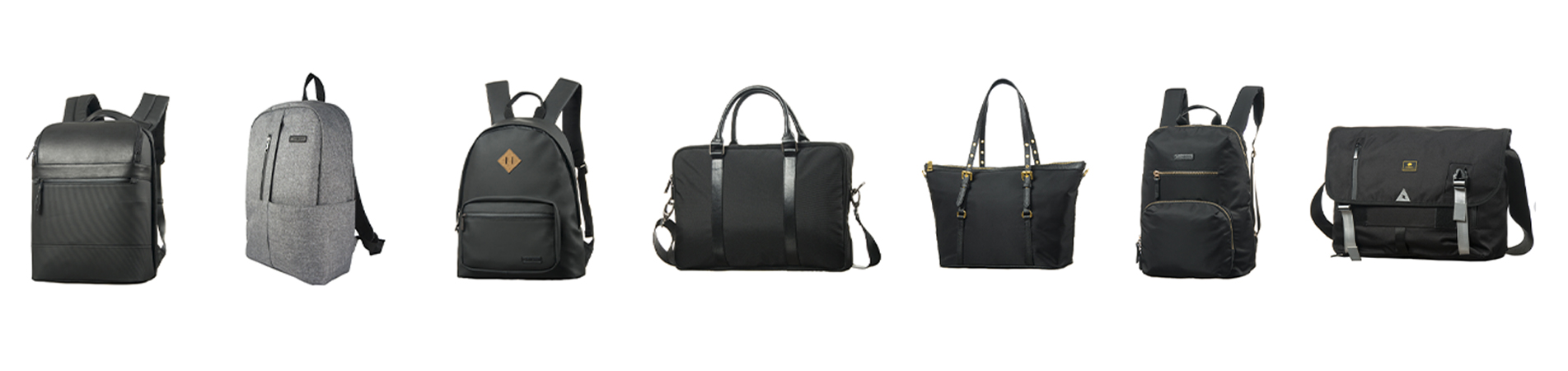
Travel bags typically feature either a bottom shoe compartment or a side shoe compartment. The right option depends on the intended use, the product structure, and how the bag will be used in real-world scenarios.
• If shoes are packed before departure and remain in the bag throughout the trip, a bottom shoe compartment is generally the better choice. It offers a stable structure and keeps the interior organized, making it suitable for Weekenders, overnight bags, and carry-on travel bags.
• If shoes are stored after workouts or outdoor activities, a side shoe compartment is easier to access. It is well suited to gym-and-travel bags, sports duffels, and team bags.
For B2B travel-bag buyers, selection should consider main-compartment capacity, structural complexity, unit cost, and product positioning—while ensuring the design can be consistently mass-produced. This article covers construction and manufacturing considerations, selection comparisons, material and logo configurations, and procurement quality-control requirements.
CONTENTS
Ⅰ. Manufacturing Differences Between Bottom and Side Shoe Compartments
Ⅱ. Comparing Bottom and Side Shoe Compartments for Product Selection
Ⅲ. Materials and Logo Application Options for Shoe Compartments
Ⅳ. Lead Time, MOQ, and Compliance Requirements for B2B Duffel Bag Procurement
Ⅴ. FAQ
Ⅵ. Conclusion
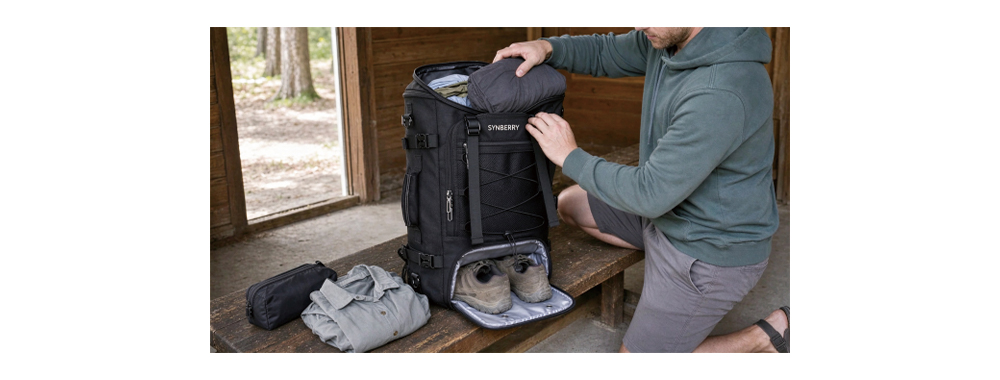
A bottom shoe compartment places the shoe-storage area beneath the main compartment, separated by an internal divider. The zipper opening is usually located along the bottom side or at the base of the bag. This construction is common in 30–40L Weekenders. When the main compartment is opened, clothing and travel essentials are visible while shoes remain tucked away below, creating a tidy interior that works well for mid- to high-end retail.
Three key areas require close control during production:
• Vertical space allocation: The shoe-compartment height directly reduces the main-compartment height. If it is too tall, clothing is harder to pack; if too shallow, shoes with thick soles or high toe boxes may not fit. During sampling, test with actual target footwear rather than relying on pattern dimensions alone.
• Bottom support and load-bearing: Shoes are heavier than clothing; a pair of sneakers typically weighs around 0.6–1.0 kg, while boots and cleats weigh more. A fixed bottom compartment concentrates weight at the lowest point, improving stability when the bag is standing. However, inadequate base support can cause sagging or deformation under load. Production designs commonly add PE board, PU board, or a thicker reinforcement panel between the shoe-compartment base and the bag bottom, and reinforce bottom seams with backtacking.
• Zipper opening width and curve: A narrow bottom-compartment opening makes bulky shoes difficult to insert or remove and can concentrate stress where the zipper teeth meet the tape. A typical design approach is to make the opening 70–80% of the compartment’s internal width and use rounded transitions at corners to reduce zipper binding when curved.
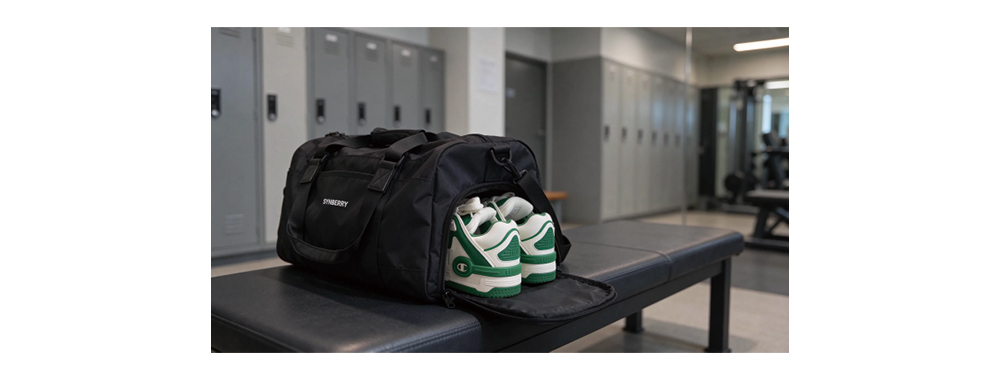
A side shoe compartment has a zipper opening at the end or side panel of the bag. Its lining extends inward toward the main compartment in a tubular or pouch-like shape, so the shoes protrude into the bag once packed. This construction is common in gym bags and rolling travel bags. Its main manufacturing advantage is that it does not use a separate vertical space at the bottom, allowing the empty bag to retain a silhouette closer to a conventional Duffel.
Key production controls include:
• Compartment depth and main-compartment capacity: Every additional shoe-storage volume reduces the usable width of the main compartment. When developing the pattern, define how much clothing the main compartment can hold with shoes fully loaded, and keep the shoe-compartment depth to the minimum practical size rather than oversizing it.
• Curved zipper sewing and side-wall reinforcement: Side-compartment zippers often follow a curved side-panel profile, requiring consistent sewing technique and proper zipper-tape pre-shrink treatment. Stress is concentrated where the shoe compartment joins the bag side wall. A webbing strip or binding is often added during production to prevent seam fatigue from repeated shoe insertion and removal.
• Ventilation and moisture management: Used athletic shoes can retain moisture and odor. Without ventilation, a sealed compartment may develop condensation and unpleasant smells. Common solutions include polyester mesh vents on the side wall or upper corner, or metal/plastic eyelets installed in the side panel. Mesh abrasion resistance should be matched to the shoe upper; overly fine mesh may wear through with repeated friction.
Selection should be based on product positioning, intended use, and retail-channel requirements—not on a preference for one construction alone. The table below highlights the differences from a B2B product-development perspective.
Comparison Criteria Bottom Shoe Compartment Side Shoe Compartment
Recommended capacity 30–40L Weekenders and carry-on bags 35–50L Duffel bags and gym/travel hybrid bags
Center of gravity & stability Low center of gravity; stable when standing; suitable for long walks or commuting Weight shifts to one side; a fully loaded single-side compartment may cause side-to-side sway when carried
Appearance & structure Adds structure to the base and helps the bag retain a more upright shape when empty Side zipper and compartment contour create a prominent functional look with a sporty feel
Space utilization Uses vertical space in the main compartment; shoes may push upward into clothing when fully loaded Uses side or end space and has less impact on main-compartment height; an overly deep compartment can reduce main-compartment width
Clean/dirty and wet/dry separation Strong separation; shoes are stored below, leaving clothing and electronics clean above Easy access, but lining and closure must prevent dirty shoes from contaminating the main compartment
Footwear compatibility Limited by the distance between the base panel and divider zipper; thick-soled shoes require testing Side compartments are often longer and may better accommodate larger US/EU sizes or bulky boots
Complexity & cost More pattern layers and base-support components; higher unit cost Simpler pattern, but curved sewing and ventilation add labor
Target channels Lifestyle brands, business-travel lines, premium retail Sports brands, fitness channels, team procurement, cross-border sports categories
• Stability and shape retention: Choose it when you want the bag to stand securely, whether empty or loaded, and to remain comfortable for longer periods of carrying or walking.
• Full wet/dry separation: Choose it when muddy soles must be kept completely separate from clean clothing and electronic devices stored above.
• Watch-out: Confirm that enough space remains in the upper main compartment for clothing when the shoe compartment is fully loaded.
• Fast access: Shoes can slide in and out like a drawer without laying the entire bag down or rummaging through the main compartment.
• Fit for larger US/EU footwear: Side compartments—especially those at either end—often provide greater length and can better accommodate larger sneakers or bulky boots.
• Ventilation: Side panels are easier to integrate with mesh vents or eyelets to help release trapped moisture.
• Watch-out: Check whether a fully loaded shoe compartment on one side shifts the bag’s center of gravity and affects carrying comfort. A heavily loaded single-side compartment is generally not recommended for technical hiking backpacks.
A shoe compartment is not an isolated module. Material selection and the overall bag configuration affect each other, as well as the available areas and appearance of logo applications.
The lining should provide separation, easy cleaning, and abrasion resistance.
Water-resistant 210D–420D nylon or polyester lining is a balanced option for travel-bag OEM projects: lightweight, wipe-clean, and cost-conscious. If the target market has a specific need for wet-shoe storage, the lining can be upgraded to TPU- or PEVA-coated materials. At the same time, confirm chemical compliance with regulations such as REACH and California Proposition 65.
For shell fabrics, 600D–900D polyester or nylon Oxford is commonly used in travel-bag shoe-compartment construction. To improve abrasion resistance in the shoe-compartment area, add reinforcement patches made of 1680D nylon or ballistic nylon to the side wall or bottom.
Zipper specifications should match the compartment dimensions and expected load.
Bottom shoe compartments have long openings and concentrated loads. A #5 or larger metal zipper, or a heavy-duty nylon zipper, paired with an auto-lock slider is recommended to reduce the risk of the zipper opening under load.
For curved side-compartment zippers, pay attention to zipper-tape flexibility and stitch-length compatibility. If the tape is too stiff, the curved section may develop wavy puckering, compromising closure and sealing performance.
Common logo applications for travel bags with shoe compartments include screen printing, embroidery, heat transfer, rubber or silicone patches, and woven labels.
Screen printing is suitable for large, single-color logos on side panels and offers a relatively low unit cost, but coverage may be limited on dark, high-density fabrics. Embroidery delivers a premium look and good durability on canvas and Oxford fabrics; however, when multiple layers are present near the shoe compartment, stitch density should be reduced to avoid excessive needle perforation. Heat transfer works well for multicolor and detailed artwork, but adhesion can deteriorate faster around areas that flex repeatedly, such as near shoe-compartment zippers. Avoid placing the primary logo in these high-flex zones.
During sampling, assess logo placement with the shoe compartment fully loaded and the fabric under tension to prevent logo distortion or shifting in mass production.
The MOQ for customized travel bags with shoe compartments depends on the fabric dyeing method, structural complexity, and logo application process.
For OEM orders using standard solid-color fabrics, a common industry MOQ is 500 pieces per style per color. Orders requiring a specific Pantone color or new pattern development usually have a higher MOQ. Some factories also set a separate MOQ for custom colors.
Standard sample development typically takes 2–3 weeks; custom hardware requiring tooling will extend the timeline. Bulk production generally takes approximately 30–60 days after sample approval, depending on sewing labor for the shoe-compartment structure, zipper and hardware procurement lead times, and total order quantity.
For customized overnight bags, we generally establish inspections at the following three checkpoints:
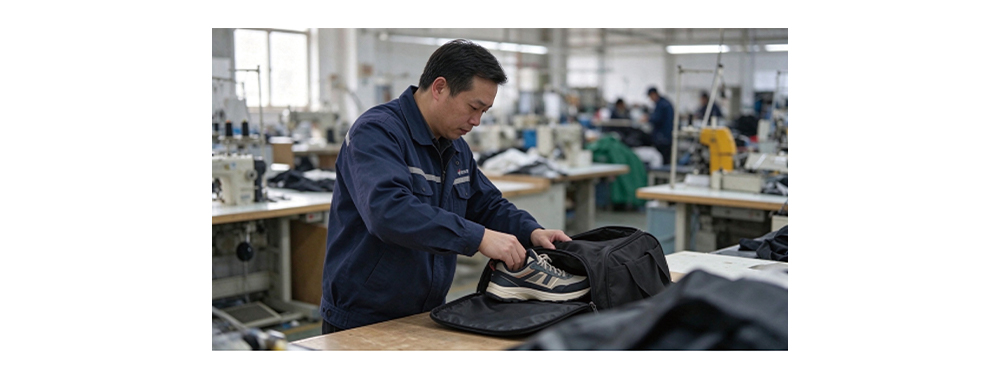
• Capacity verification: Conduct physical fit tests using representative footwear from the target market, not just one size. Record zipper closing resistance, compartment deformation, and actual usable main-compartment space under empty, standard-load, and maximum-load conditions
• Zipper and seam reliability: Perform repeated zipper opening-and-closing tests. On curved side-compartment sections, inspect whether stitches consistently catch the zipper tape and check for skipped stitches. At bottom-compartment corners, verify that backtacking reinforcement is correctly applied
• Ventilation and lining integrity: For mesh vents, verify seam strength between the mesh and compartment fabric to prevent edge fraying during use. Seal or bind seams in water-resistant linings to prevent moisture from wet shoes penetrating through needle holes into the main compartment
A: If the Weekender is mainly intended for overnight trips, business-casual travel, or airport use—and shoes are packed before departure and stay in the bag—the bottom shoe compartment is a better fit for a tidy presentation, base stability, and premium retail appeal. If the same SKU also needs to support gym use or quick storage after workouts, a side shoe compartment offers faster access. However, it reduces the main compartment’s usable width, so capacity should be confirmed through physical footwear testing during development.
A: Yes, but the extent depends on compartment depth and footwear shape. Once shoes are inserted, the side compartment protrudes into the main compartment, directly taking up horizontal space. During sampling, test with representative athletic shoes from the target market at full load and set the compartment depth to the minimum that still allows comfortable insertion and removal, without adding excessive extra volume.
A: Mesh vents offer a good balance of cost and performance, but mesh weight and weave density must match the abrasion caused by the shoe upper. Mesh that is too fine may wear through with repeated rubbing. Eyelets offer a cleaner look and suit more formal Weekenders, but their ventilation area is smaller and may be less effective for damp athletic shoes. A production-friendly compromise is to place a mesh panel in the upper corner of the shoe compartment and retain eyelets along the lower side wall to create a low-speed airflow path.
A: Most shoe compartments use wipe-clean water-resistant nylon or polyester lining. For routine care, wipe with a damp cloth and air-dry naturally. Machine washing or prolonged soaking is not recommended, as it may damage the coating or bonded layers. If antibacterial or odor-control treatments are added, confirm that the additives comply with regulations in the target market. Ventilation and regular cleaning remain the primary measures; functional treatments cannot replace physical airflow.
A: Each option supports a different product strategy:
• Integrated shoe compartment: Built into the bag structure, it delivers a cohesive retail presentation and a clear functional selling point. It can differentiate a flagship SKU, but adds pattern layers, sewing labor, and unit cost
• Separate shoe bag: Lower cost and flexible to produce, it works well as an included accessory or promotional bundle. However, it has less retail impact and may not create a strong functional identity on its own
• Detachable shoe bag: A middle-ground option that combines flexibility and feature visibility, but requires connector design and reliability testing under full load. For smaller orders or cost-sensitive development, a separate or detachable shoe bag may be preferable. For a mid- to high-end product that emphasizes travel and footwear storage, an integrated compartment is a stronger fit
A: A bottom shoe compartment typically requires a base support panel and internal divider, adding weight and pattern complexity. A side-entry compartment avoids a separate bottom support structure, but curved zippers and ventilation panels add sewing time. In packing, an empty side compartment is generally easier to flatten. A bottom compartment with a support board may fold less flat, potentially affecting carton dimensions and the number of units packed per carton.
Although a shoe compartment is only one functional module in a travel bag, it affects construction, material configuration, and cost control throughout product development. For B2B travel-bag buyers, the key to choosing a bottom or side shoe compartment is whether the design aligns with the product positioning and intended use case.
With extensive experience in bag OEM/ODM, we can provide professional support from structural evaluation and full-load testing to preliminary compliance checks during the early stages of development—helping you reduce development risks and unnecessary costs. If you are preparing your next travel-bag collection, contact us. We can develop a solution tailored to your brand positioning and market requirements.
| Author | ||||||
|
Continue lendo, mantenha-se informado, inscreva-se e convidamos você a nos dizer o que você pensa.




Direitos autorais
@2024 Synberry Bag & Package Products Co.,Ltd Todos os direitos reservados
.
 SUPORTADO POR REDE